Risk management
Assess and treat the risks to your assets.
Information, processes and systems in one inventory, each with a responsible person. Protection requirements are determined in a traceable way, approved and passed on to the systems through their dependencies.
Assets are organised in your own categories and parent categories. Whoever is named as owner confirms the responsibility or declines it with a reason, so that ownership does not just exist on paper.
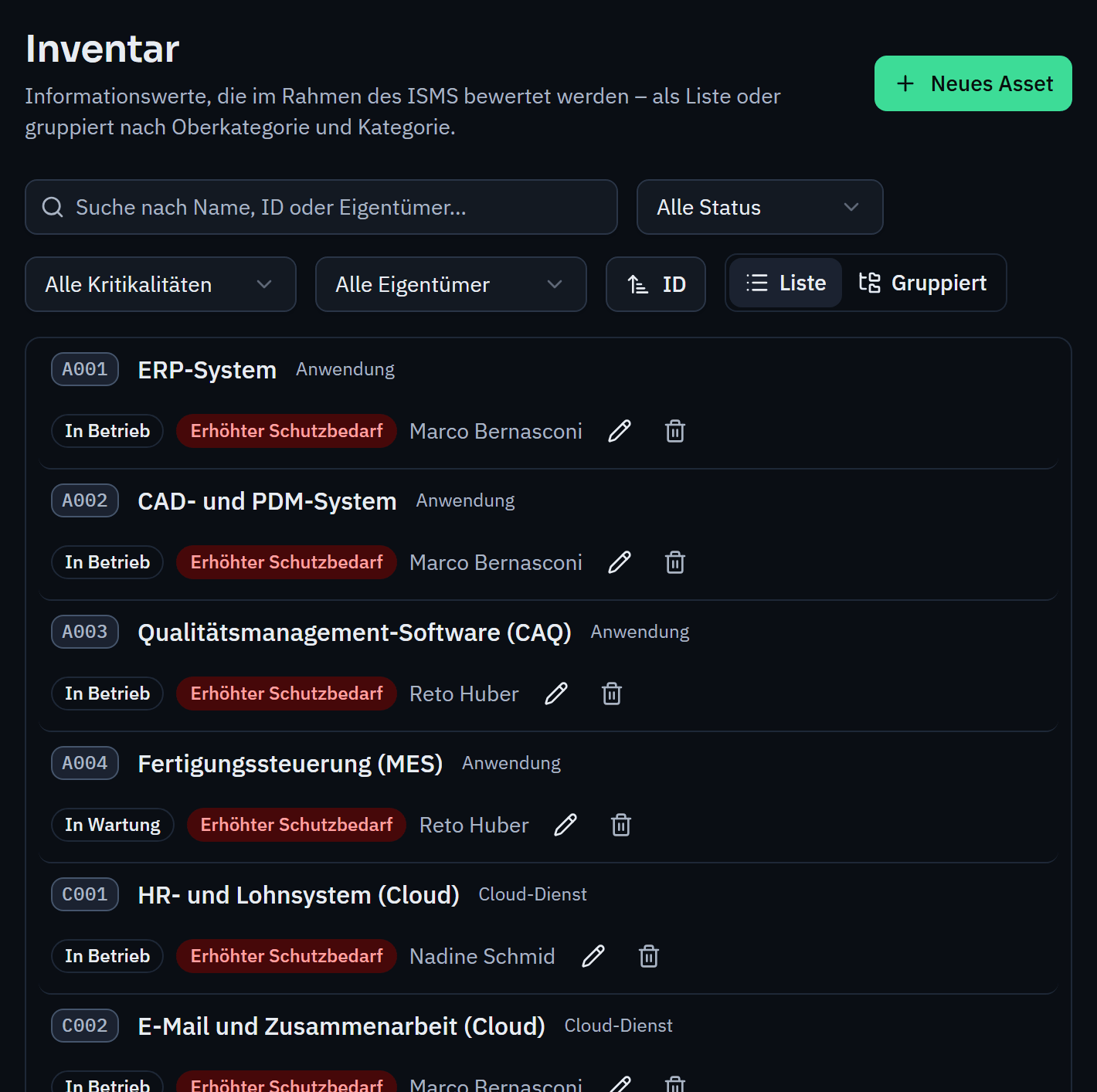
For information and processes, the protection requirements are determined and justified per security objective using guiding questions. The analysis is submitted and approved through a defined approval workflow, never by the person who submitted it.
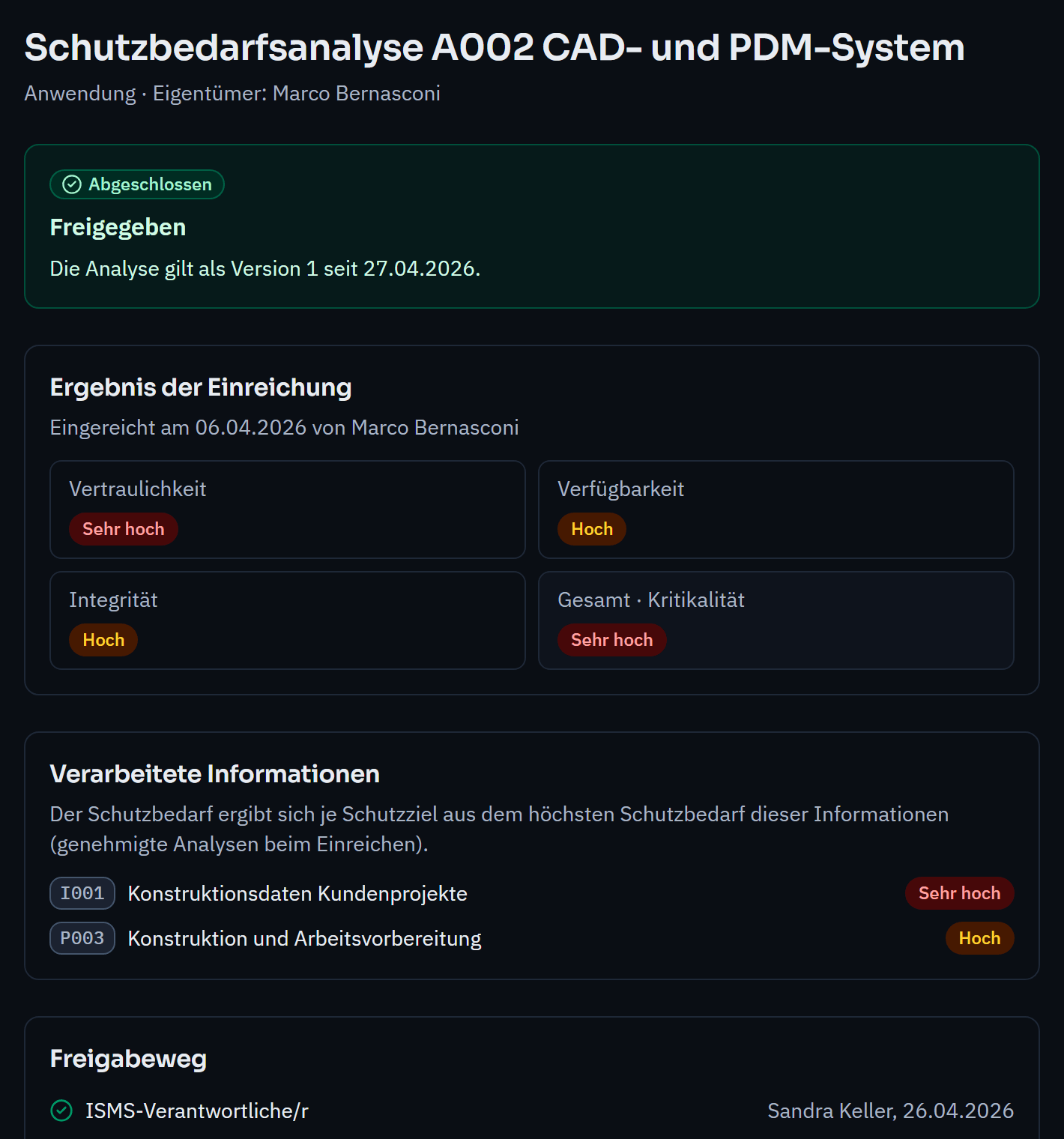
Systems inherit their protection requirements from the information they process. If a piece of information changes, the system owner sees that their analysis needs to be reviewed.
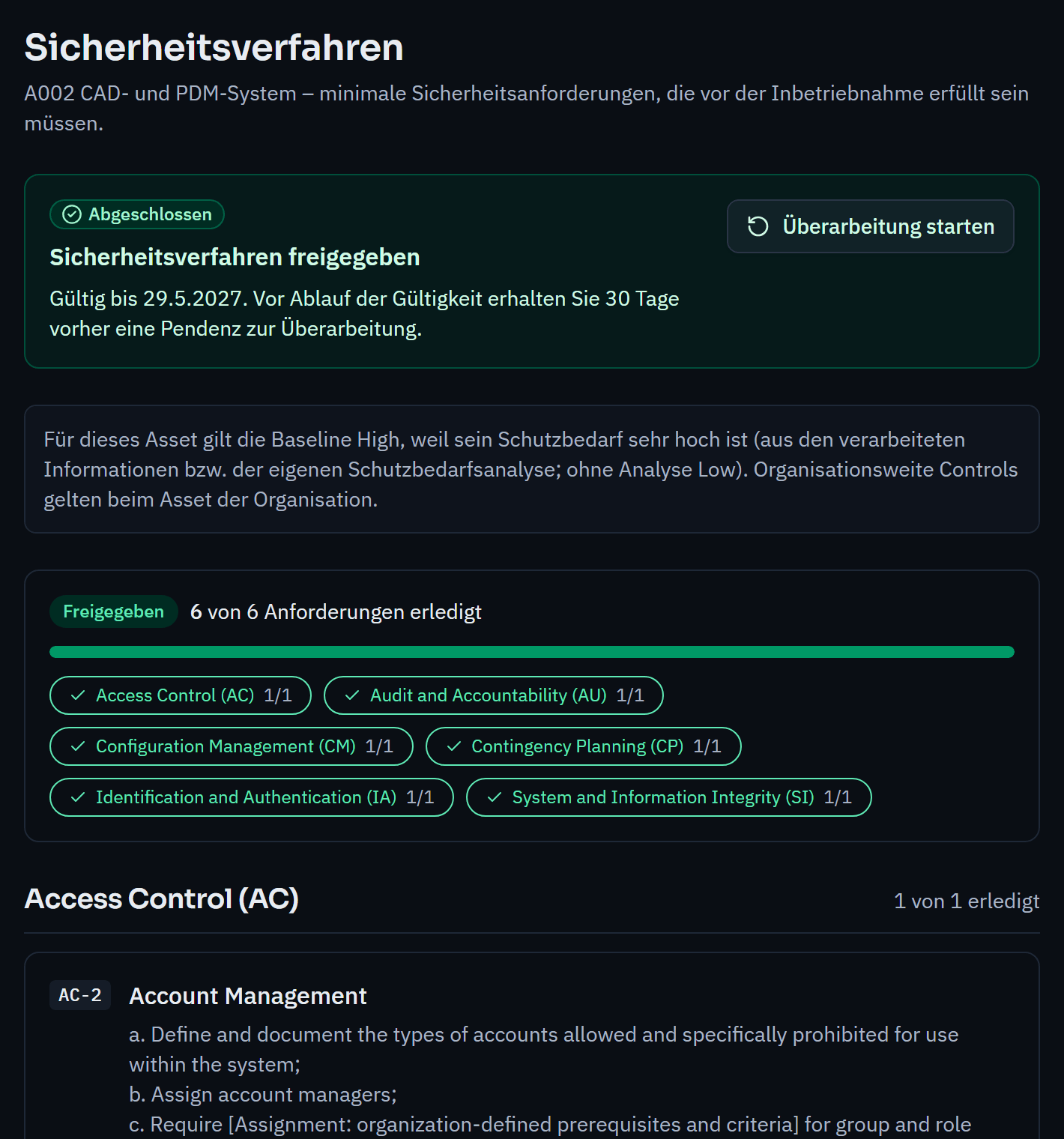
For each asset category you define which requirements apply, for example the NIST SP 800-53 baseline that matches the protection requirements, or the chapters of the ICT baseline protection that match the type of system. The owner answers them, backs up the implementation with evidence and submits the result for approval.
Assess and treat the risks to your assets.
Personal data per system and the data protection impact assessment.
Controls by protection requirements.
The Swiss federal minimum requirements per system.
No. The approach is based on BSI Standards 200-2 and 200-3, but the requirements per asset category come from the frameworks you choose, for example NIST SP 800-53, the ICT baseline protection (Switzerland) or your own requirements.
The approvers in the approval workflow your organisation defines. The person who submitted the analysis cannot approve it themselves.
How close are you to ISO/IEC 27001?
In a personal demo, we show you the way to the readiness report, with no obligation. Or try it free for 30 days with every feature.