Requirements & SoA
Measures and internal controls as evidence per requirement.
Measures have responsible people and due dates, recurring tasks a fixed schedule with evidence for every execution. Where a requirement cannot be met, there is a time-limited, approved exception.
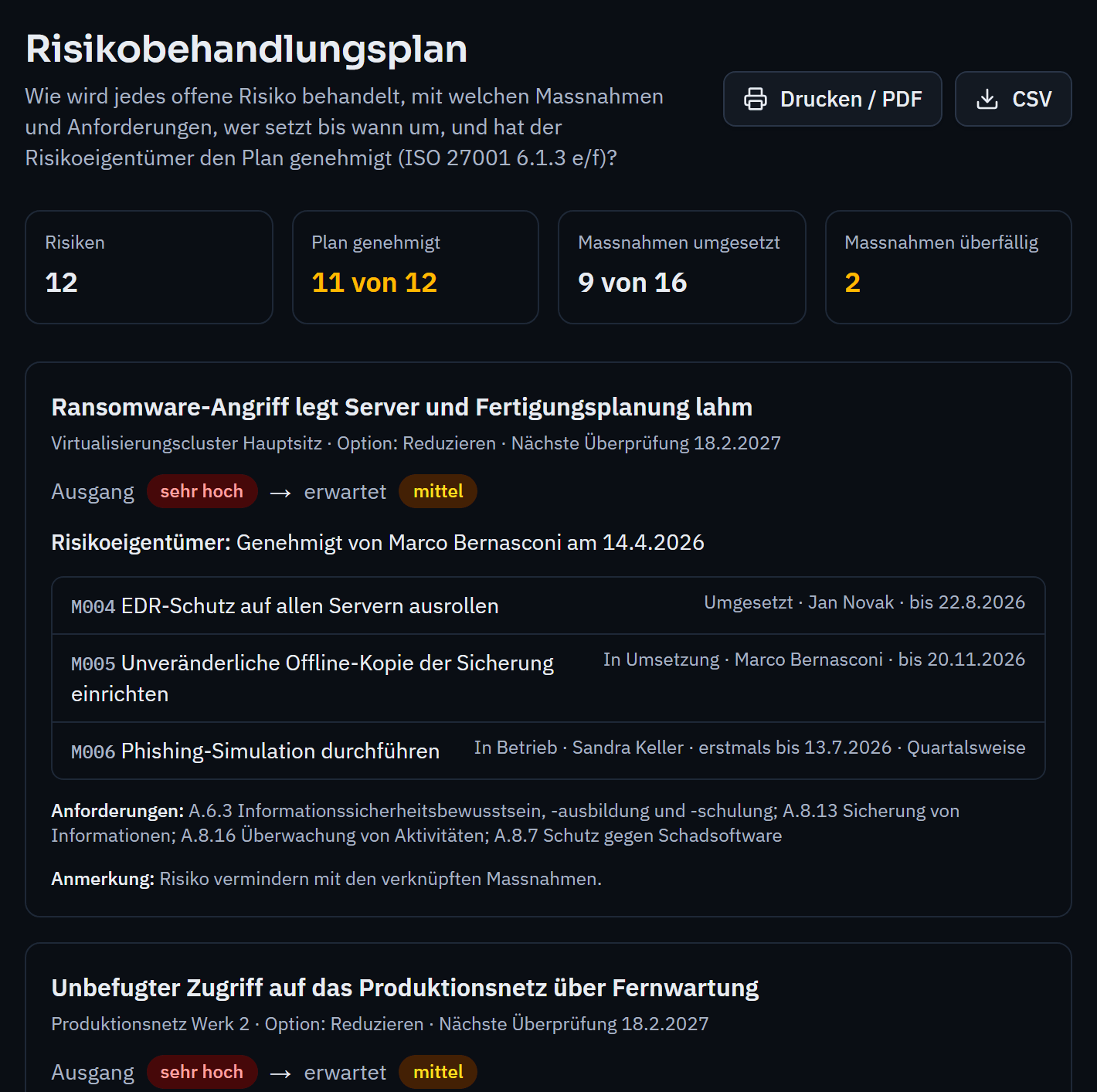
Every measure moves through Planned, In progress and Implemented. Whoever reports it as implemented describes how, and attaches evidence if needed. Overdue measures are visible straight away.
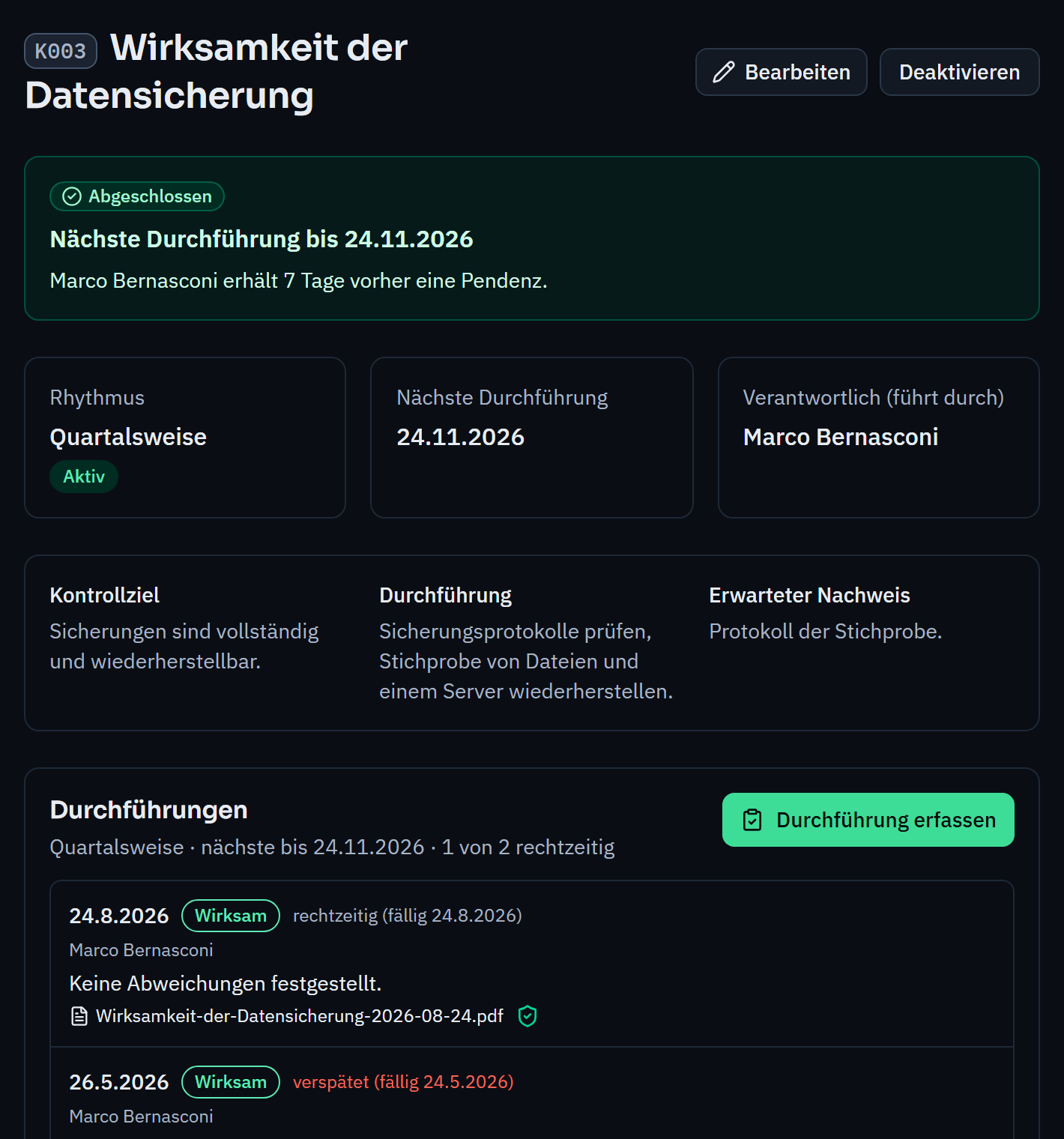
Tasks such as applying patches get a schedule. Every execution is recorded with a date and PDF evidence, and missed dates are visible straight away.
Checks such as the quarterly review of access rights are kept as internal controls with an objective, execution and expected evidence. A deficiency leads to a corrective measure and, if needed, a follow-up review.
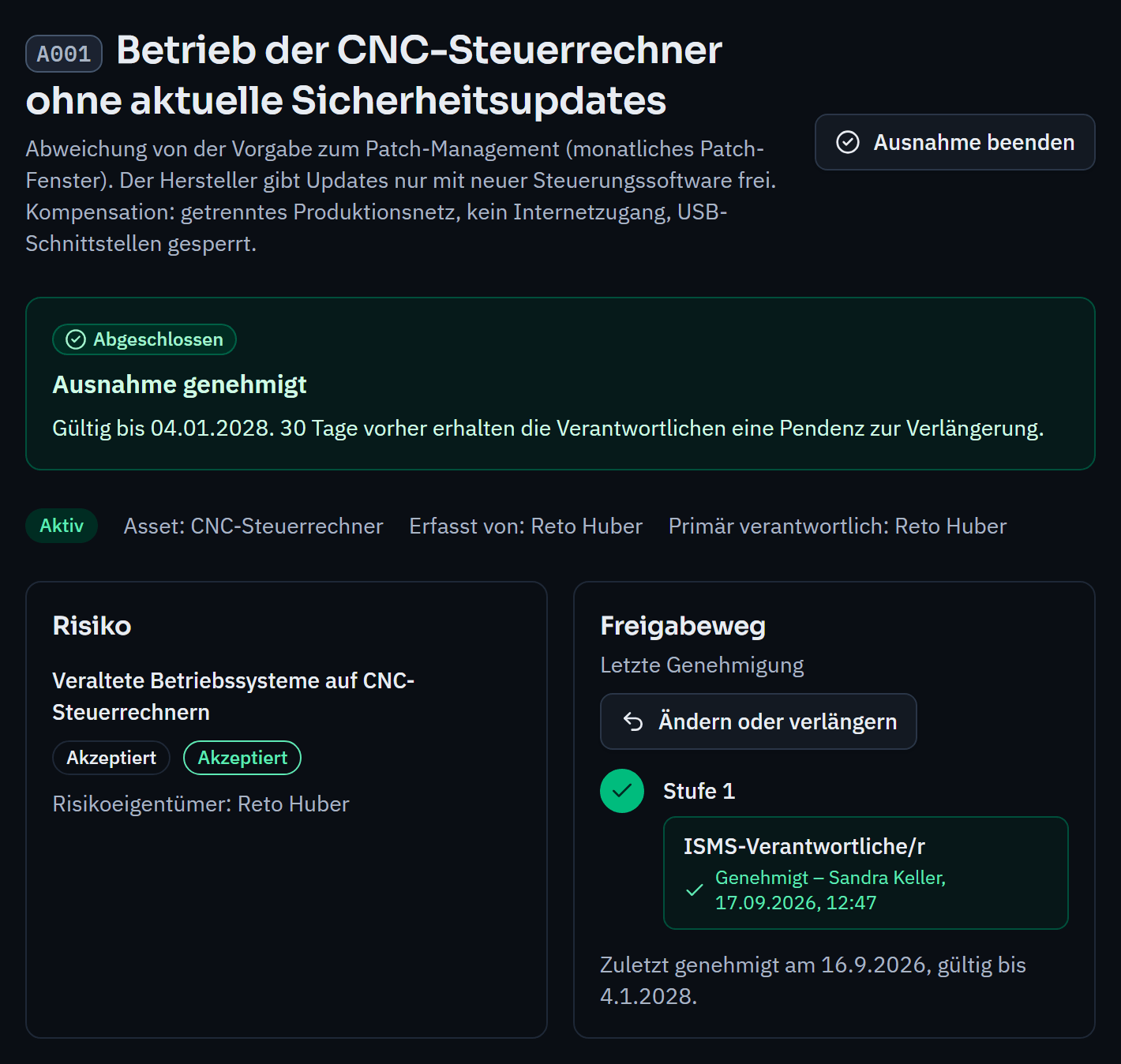
An exception is a deliberate, time-limited deviation from a requirement. It needs a linked risk and only takes effect once the approval workflow is signed off and the risk is accepted.
Measures and internal controls as evidence per requirement.
Why a measure is needed.
A measure changes something, for example a new firewall rule. An internal control checks regularly whether something works, for example whether the backup can be restored. Both can be linked to risks and requirements.
Until the date set when it was approved. Before it expires, the responsible people receive a reminder; it is extended only through a new approval.
How close are you to ISO/IEC 27001?
In a personal demo, we show you the way to the readiness report, with no obligation. Or try it free for 30 days with every feature.